
Key Takeaways
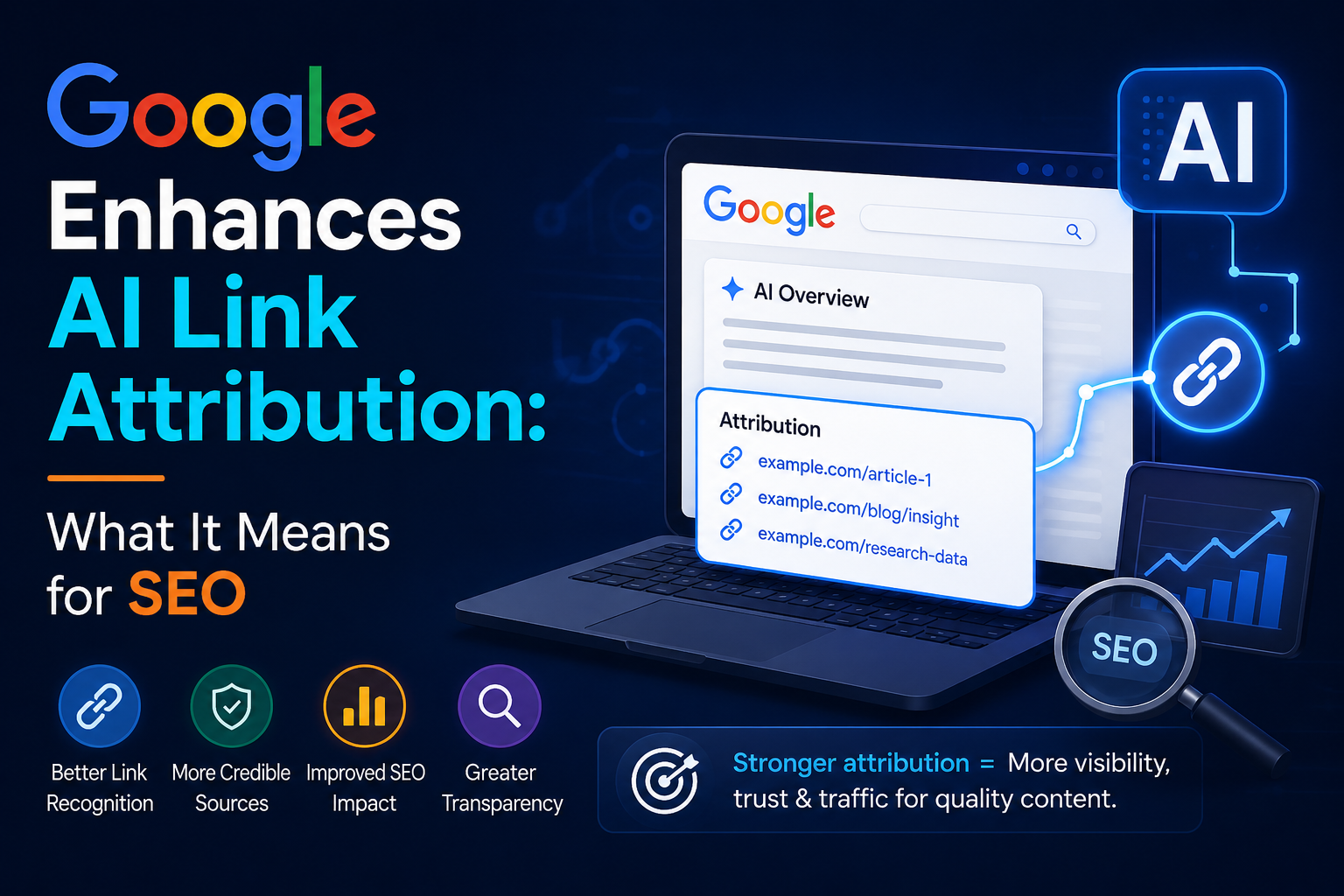
- Google AI Mode and AI Overviews now include five major updates that make source attribution more visible and transparent.
- New features such as inline citations, hover previews, publisher attribution, and clickable source links encourage users to visit external websites.
- These improvements address concerns about declining organic traffic, click-through rates (CTR), and website visibility caused by AI-generated search results.
- As AI-powered search continues to evolve, creating high-quality, authoritative, and EEAT-focused content is becoming more important than ever.
- Businesses, publishers, and SEO professionals should monitor traffic trends, optimize for AI search, and build content that Google considers trustworthy enough to cite.
Google Enhances AI Link Attribution: What It Means for SEO
Google AI Search is transforming how users discover information online—and how websites earn organic traffic. With AI Overviews and AI Mode, Google can answer search queries directly on the results page, reducing the need for users to click through to websites.
This shift has sparked concerns among publishers, bloggers, and digital marketers about declining organic search traffic, lower CTR (Click-Through Rate), and reduced website visibility.
To address these concerns, Google has introduced five significant improvements to AI Link Attribution, making source citations clearer, more accessible, and more useful for users. The goal is to increase transparency while encouraging users to explore trusted websites for additional information.
What’s New in Google AI Link Attribution?
Google’s latest AI search update includes several improvements designed to benefit both users and content creators:
- Inline citations that appear naturally within AI-generated answers.
- Hover previews allowing users to preview source content before clicking.
- More prominent publisher attribution to improve brand recognition.
- Better placement of source links throughout AI responses.
- Enhanced citation visibility that makes trusted websites easier to discover.
These updates aim to improve user trust while sending more qualified visitors to authoritative websites.
What This Means for Your SEO Strategy
Google’s AI search experience is changing the future of Search Engine Optimization (SEO). Ranking on Page 1 is no longer enough—you also need to become a source that Google’s AI trusts and cites.
To improve your chances of appearing in AI-generated answers:
- Create high-quality, original content that demonstrates expertise.
- Strengthen E-E-A-T (Experience, Expertise, Authoritativeness, and Trustworthiness) signals.
- Optimize for long-tail keywords, featured snippets, and semantic search.
- Use clear headings, structured data, and FAQ sections to improve AI readability.
- Build topical authority through comprehensive content clusters and internal linking.
- Earn quality backlinks from authoritative websites.
- Regularly update content to keep it accurate and relevant.
The Bottom Line
Google’s enhanced AI Link Attribution is a positive step for publishers and SEO professionals. While AI-powered search continues to reshape user behavior, these improvements increase the visibility of trusted sources and create more opportunities for websites to earn clicks.
The future of SEO isn’t just about ranking higher—it’s about becoming the most authoritative, trustworthy, and citation-worthy source in your industry. Businesses that invest in valuable content, technical SEO, and user experience will be better positioned to succeed as Google AI Search, AI Overviews, and AI Mode continue to evolve.